Have you noticed that your upper teeth cover your lower teeth too much, your front teeth do not meet, or some upper teeth bite inside the lower teeth?
These may be signs of a bite problem. The way your teeth meet can affect chewing, comfort, oral hygiene and long-term dental health.
This article explains three common bite problems — overbite, open bite and crossbite — and why orthodontic assessment may be helpful.
What Is Bite Correction?
Bite correction improves the way your upper and lower teeth meet when you close your mouth. Not every bite variation requires treatment, but some may contribute to tooth wear, gum trauma, difficulty chewing or uneven tooth contact.
Treatment depends on your age, dental health, the type and severity of the problem, and whether the cause involves the teeth, jaws or both.
1. Overbite
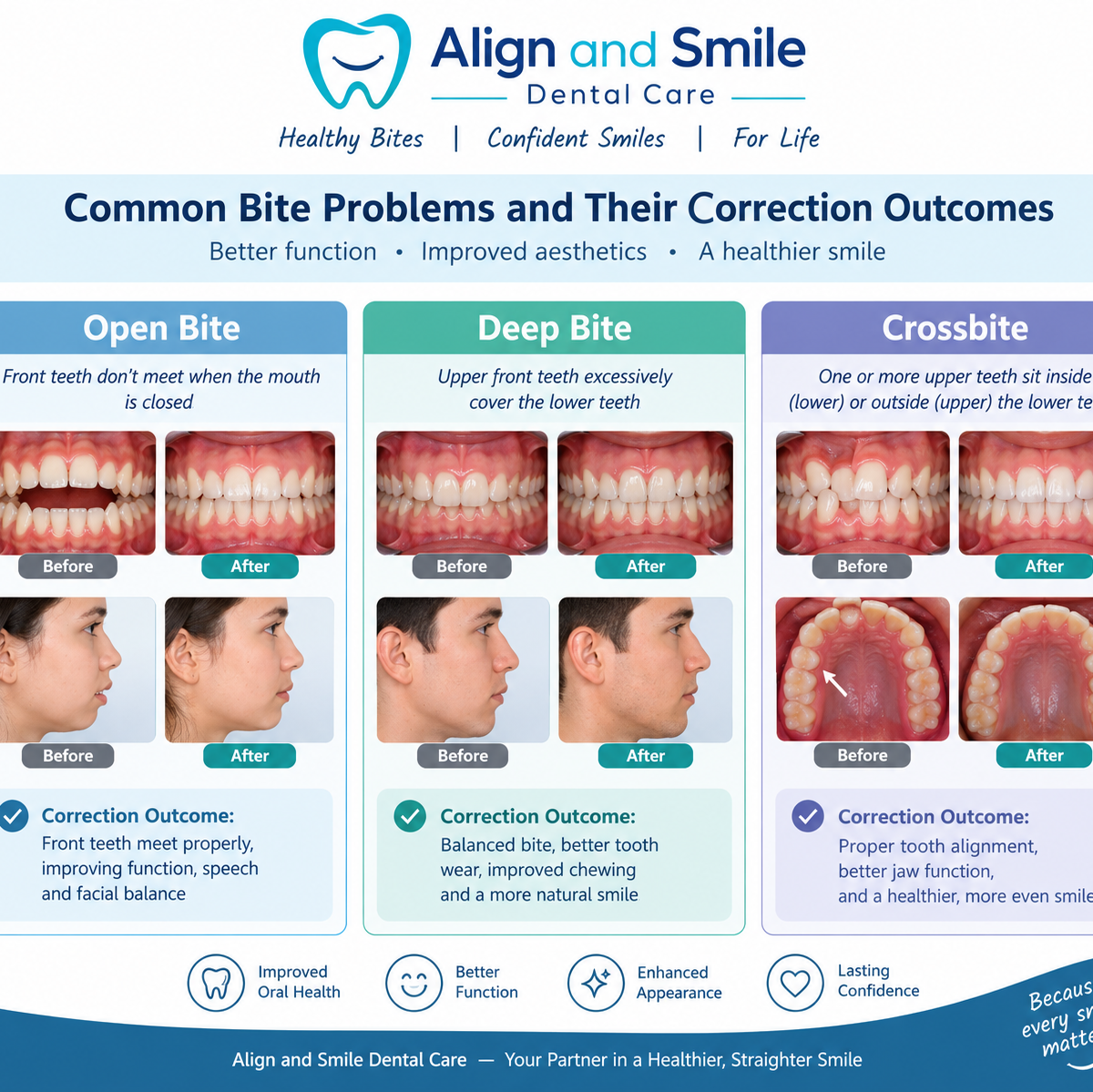
An overbite is the vertical overlap of the upper front teeth over the lower front teeth. A small amount is normal, but excessive overlap may require assessment.
Signs of an excessive overbite
You may notice:
• Your upper front teeth cover most of your lower teeth.
• Your lower teeth touch the roof of your mouth or the gum behind the upper teeth.
• Very little of your lower teeth shows when you smile.
• Your teeth or gums experience repeated trauma.
• Some teeth appear unevenly worn.
Why should it be addressed?
A severe overbite may cause gum trauma, tooth wear, front-tooth damage or jaw discomfort. Treatment may include braces, clear aligners or other orthodontic appliances. Severe jaw discrepancies may require combined orthodontic and surgical treatment.
2. Open Bite
An open bite occurs when certain upper and lower teeth do not touch when the mouth is closed. In an anterior open bite, a gap remains between the front teeth.
Signs of an open bite
You may notice:
• Your front teeth do not meet when you bite down.
• Biting into food is difficult.
• Your tongue moves forward between your teeth when swallowing.
• You have speech or smile-related concerns.
Possible causes include prolonged thumb sucking or pacifier use, tongue habits, jaw-growth patterns and the way teeth erupt.
Why is correction important?
An open bite may make biting food difficult and can sometimes affect speech, confidence and treatment stability. Treatment may include habit management, braces, clear aligners, growth-related appliances or, in severe skeletal cases, jaw surgery.
3. Crossbite
A crossbite occurs when one or more upper teeth bite inside the corresponding lower teeth. It may affect the front teeth, back teeth or both.
Signs of a crossbite
You may notice:
• One or more upper teeth sit behind the lower teeth.
• Your teeth shift to one side when you close your mouth.
• Your dental midlines do not match.
• Your bite feels uneven.
• Some teeth wear more than others.
A crossbite may result from differences in jaw width or position, tooth eruption, crowding or dental development.
Why should it be corrected?
Depending on its severity, a crossbite may contribute to uneven tooth wear, gum trauma, gum recession or a functional jaw shift. Treatment may include braces, clear aligners or appliances that correct the width or position of the dental arches.
What Happens If a Bite Problem Is Left Untreated?
Some mild bite variations can be monitored. Others may contribute to:
• Uneven tooth wear
• Gum trauma
• Difficulty biting or chewing
• Oral hygiene challenges
• Functional jaw shifts or discomfort
• Smile-related concerns
These problems are not inevitable. An orthodontic examination can help determine whether treatment is needed.
When Should You Visit an Orthodontist?
Consider an orthodontic consultation if you notice excessive front-tooth overlap, a persistent gap between the front teeth, upper teeth biting inside the lower teeth, difficulty biting food or a jaw shift when closing your mouth.
An orthodontic evaluation is generally recommended for children by around age seven to identify developing problems. Adults can also undergo bite correction, depending on their dental and jaw health.
How Are Bite Problems Treated?
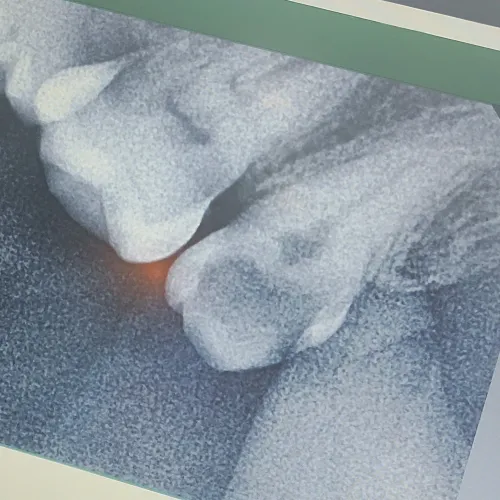
At Align and Smile Dental Care, I assess your teeth, bite, jaw relationship and oral health. Photographs, scans, dental models or X-rays may be recommended when necessary.
Treatment options may include:
• Fixed braces
• Clear aligners
• Specialised orthodontic appliances
• Expansion appliances
• Combined orthodontic and surgical treatment for complex jaw discrepancies
Retainers are important after treatment to help maintain the corrected tooth positions.
Frequently Asked Questions
What is the difference between an overbite, open bite and crossbite?
An overbite is excessive vertical overlap of the upper front teeth. An open bite occurs when certain upper and lower teeth do not meet. A crossbite occurs when one or more upper teeth bite inside the lower teeth.
Is bite correction necessary?
Not every bite problem requires treatment. Significant problems may contribute to tooth
Keywords