By Dr. Ruchi Saxena | Align & Smile Dental Care, Sector 18, Noida
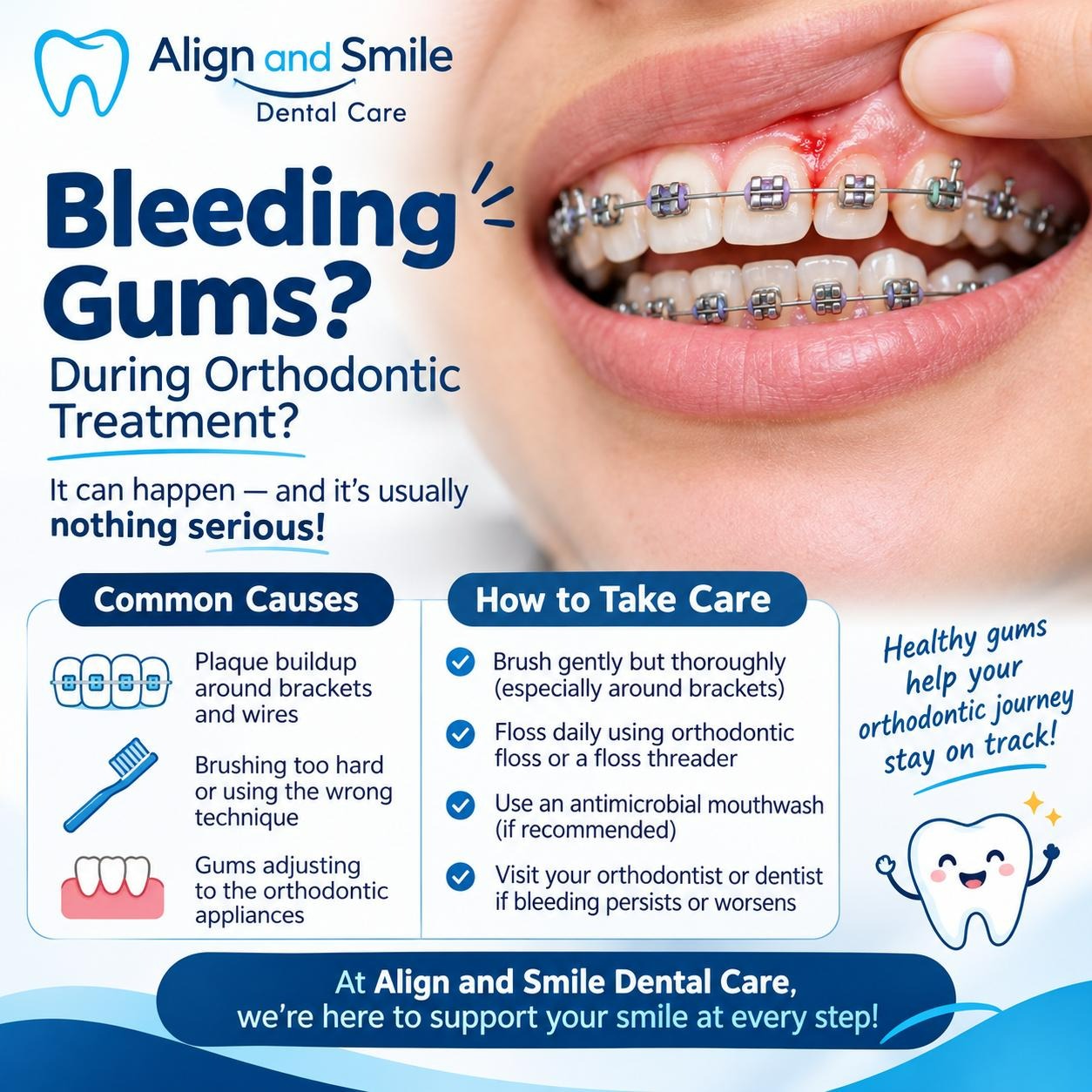
Have you noticed blood while brushing your teeth after getting braces? Do your gums look swollen, red, or bleed when you touch them?
If yes, let me tell you something: You are not alone. Many patients undergoing orthodontic treatment experience bleeding gums at some point during their braces journey.
As an Orthodontist, one question I frequently hear from patients is, 'Doctor, why are my gums bleeding since I got braces? Is something wrong with my treatment?'
My answer is that bleeding gums should never be ignored, but there is no need to panic either. In most cases, the problem is related to plaque buildup and difficulty cleaning around braces.
Let me explain why this happens, what you can do about it, and when you should visit your dentist.
Why Do Gums Bleed During Braces Treatment?
Braces make cleaning your teeth a little challenging, as food particles and bacteria can collect around the brackets and wires. If not cleaned properly, they form a sticky layer called plaque, which irritates the gums and causes inflammation, known as gingivitis.
Common signs include:
• Bleeding while brushing or flossing.
• Red, swollen or puffy gums.
• Bad breath.
• Gum tenderness or discomfort.
Is Gum Bleeding Normal After Getting Braces?
I often explain to my patients that occasional gum sensitivity can happen when they are getting used to braces, especially when their oral hygiene routine changes.
However, regular bleeding is not something you should consider normal.
If your gums bleed repeatedly while brushing, flossing, or eating, it usually means that your gums are inflamed and need attention.
Remember, braces themselves should not cause your gums to bleed continuously. The most common reason is plaque accumulation around the brackets and along the gum line.
How Can You Stop Gum Bleeding While Wearing Braces?
If your gums bleed during braces treatment, a few simple changes in your daily oral care routine can help:
1. Brush twice daily: Use a soft-bristled toothbrush to gently clean around brackets, wires and the gum line.
2. Use an interdental brush: It helps remove trapped food and plaque from areas your regular toothbrush may miss.
3. Floss daily: Use orthodontic floss or a floss threader to clean between your teeth.
4. Rinse after meals: Swish with plain water to remove leftover food particles.
5. Limit sugary and sticky foods: These encourage plaque buildup and increase the risk of gum inflammation.
6. Get regular dental check-ups: If bleeding persists, consult your dentist for a gum examination and professional cleaning if needed.
Remember: Don't stop brushing because your gums bleed. Gentle and proper cleaning is essential for healthy gums during braces treatment.
Can Bleeding Gums Affect Your Braces Treatment?
Yes, untreated gum problems can affect the progress and safety of orthodontic treatment.
Your teeth are supported by the gums and the bone underneath them. Healthy supporting tissues are important for safe tooth movement.
If gum inflammation is ignored for a long time, it can progress to periodontitis, a more serious form of gum disease that may damage the tissues and bone supporting your teeth.
In such cases, your orthodontist may need to reassess your treatment and, if necessary, temporarily modify or pause tooth movement until your gums are healthy.
This is why I always remind my patients that straight teeth are important, but healthy gums are equally important.
When Should You Visit Your Dentist for Bleeding Gums?
Occasional bleeding that settles quickly may not be an emergency, but repeated bleeding deserves attention.
Please schedule a dental examination if you experience:
• Gums that bleed regularly while brushing.
• Swelling or redness around multiple teeth.
• Persistent bad breath.
• Gums that appear to be pulling away from your teeth.
• Pain or tenderness in your gums.
• Pus around the gums or loose teeth.
If you notice facial swelling, fever, or rapidly worsening pain, seek prompt dental care.
Early diagnosis makes gum problems much easier to manage.
Frequently Asked Questions About Bleeding Gums During Braces Treatment
Q1. Why do my gums bleed every time I brush with braces?
The most common reason is plaque buildup around your brackets and gum line. This irritates your gums and makes them bleed easily. Use a soft toothbrush and clean around your braces carefully. If bleeding continues, get your gums examined.
Q2. Should I stop brushing if my gums are bleeding?
No. Stopping brushing can allow more plaque to accumulate and make the problem worse. Continue gentle, thorough brushing with a soft-bristled toothbrush.
Q3. Can braces cause swollen gums?
Braces do not directly cause gum disease, but they make cleaning more challenging. When plaque accumulates around brackets, your gums can become swollen and inflamed.
Q4. How long does gum bleeding last after getting braces?
There is no fixed duration. Mild irritation may settle, but bleeding caused by plaque-related gum inflammation will not necessarily disappear on its own. Proper cleaning and professional evaluation are important.
Q5. Can I use mouthwash to stop bleeding gums?
Some mouthwashes can help manage gum inflammation, but not every mouthwash is suitable for everyone. A medicated mouthwash should only be used when recommended by your dentist.
Q6. Will my orthodontist remove my braces if my gums are bleeding?
Not necessarily. Mild gum inflammation can often be managed while continuing orthodontic treatment. However, if there is significant gum disease, your orthodontist may need to modify or temporarily pause treatment.
Q7. Is bleeding gums a sign that my braces are too tight?
Usually, no. Bleeding gums are more commonly associated with plaque buildup and gum inflammation rather than the tightness of braces.
My Advice to Every Patient Wearing Braces
I always tell my patients that orthodontic treatment is not just about getting straight teeth. It is also about maintaining healthy teeth and gums throughout the journey.
You may be very regular with your orthodontic appointments, but your daily cleaning routine plays an equally important role.
Please do not ignore bleeding gums or assume that they are simply a part of wearing braces. With the right brushing technique, proper flossing, and timely dental check-ups, most early gum problems can be managed effectively.
If you are experiencing bleeding gums during braces treatment, I encourage you to get them checked rather than trying random home remedies.
At Align & Smile Dental Care, Sector 18, Noida, we believe that every beautiful smile should also be a healthy smile.
Take care of your gums, and let your braces journey be a comfortable and healthy one!
Dr. Ruchi Saxena
Align & Smile Dental Care
Sector 18, Noida
Keywords